How JINPAT LPT Series Through-Bore Slip Rings Facilitate Data Transmission in Humanoid Robots
Robot2026-06-27
Humanoid robots are highly integrated systems; their neck and waist joints function like a "spine," simultaneously handling power supply, command transmission, and visual data feedback. The stability of these rotating connections directly determines the robot's overall motion precision.
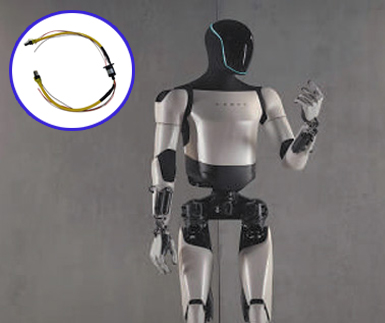
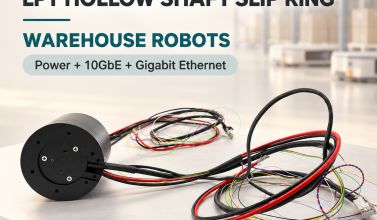
How does the JINPAT LPT series (through-bore slip rings) serve as a transmission hub?
1. Stable Electrical Pathways: This series utilizes precious metal contact technology to ensure uninterrupted and highly reliable power and signal transmission, even during high-speed rotation.
2. Optimized Physical Structure: Its central through-bore design integrates seamlessly with hollow-shaft motors, saving valuable space while effectively protecting transmission cables and physically preventing damage caused by repeated twisting.
3. High-Speed Signal Fidelity: To meet the growing demand for high-definition vision in modern robotics, the JINPAT LPT series is fully compatible with Ethernet and GMSL protocols. Its superior electromagnetic shielding ensures ultra-low latency and minimal packet loss during transmission, maintaining high stability even amidst complex interference generated by motor operations.
4. Distributed Collaborative Architecture: Multiple LPT slip rings can be deployed within a robot's multi-joint system to meet the specific requirements of the neck, waist, and limbs. This distributed installation creates a high-speed, whole-body communication network, ensuring precise synchronization of joint movements.
As humanoid robots evolve toward greater intelligence and precision, the value of rotating components has transcended simple electrical connectivity, extending into the realm of precise, complex data transmission. With its reliable performance, the JINPAT LPT series is becoming a key technological cornerstone supporting the autonomous operation of humanoid robots in complex environments.

 Facebook
 Reddit
 Twitter
 LinkedIn
 Youtube